Many beginners think cleansing is just “washing your face.”
In Korean skincare, cleansing is much more than that. It’s the first and most important step that determines how well the rest of your routine will work.
In recent years (especially around 2023), K-beauty trends have shifted toward gentle but deep pore cleansing.
The goal is simple: remove makeup, sunscreen, excess oil, and pollution without damaging your skin barrier.
This guide will walk you through how Korean double cleansing works, how to choose the right cleansers, and how to avoid common mistakes—so you can start building clear, healthy skin from step one.
What Does “Deep Pore Cleansing” Really Mean in K-Beauty?

When people hear “deep pore cleansing,” they often imagine harsh scrubs or strong cleansers that leave skin feeling tight and squeaky clean.
In modern Korean skincare, deep pore cleansing means:
- Removing makeup, sunscreen, excess sebum, and pollution
- Keeping the skin barrier comfortable and hydrated
- Avoiding redness, irritation, and over-drying
Instead of relying on one strong cleanser, K-beauty prefers a two-step double cleansing routine using gentle formulas.
Why Is Double Cleansing So Important in Korean Skincare?


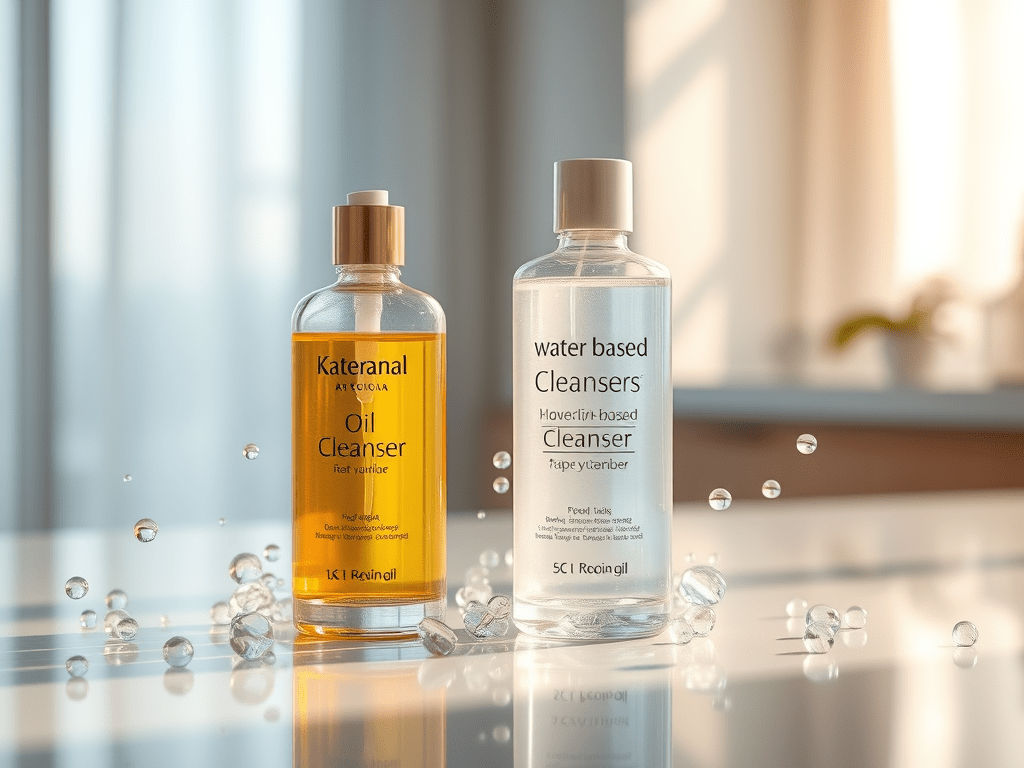
Double cleansing means using two different cleansers, usually at night:
- An oil-based cleanser (oil or balm)
- A water-based cleanser (gel, foam, or milk)
You use them in this order, especially when you wear sunscreen or makeup.
Why not just wash once?
Because different types of dirt need different types of cleansers.
- Oil-based cleanser removes oil-based impurities
- Makeup
- Sunscreen
- Excess sebum
- Water-based cleanser removes water-based impurities
- Sweat
- Dust and pollution
- Skincare residue
Together, they clean deeply without relying on harsh formulas.
Step 1: How Do Oil Cleansers Clean Your Pores?
Oil cleansers are a K-beauty classic for a reason.
Simply put, oil dissolves oil, which allows these cleansers to gently break down:
- Waterproof makeup
- Long-wear sunscreen
- Sebum and oxidized oil inside pores
Modern Korean oil cleansers are usually:
- Lightweight (not thick or sticky)
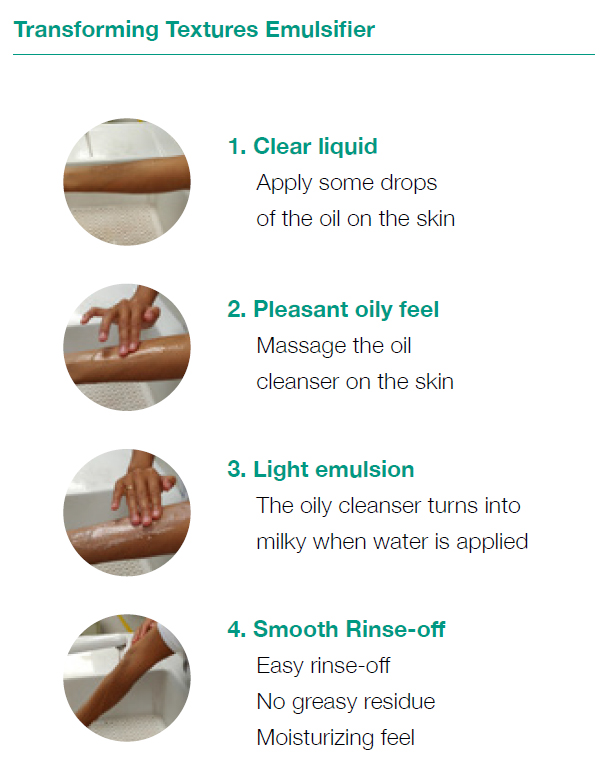
- Easily emulsifying (they turn milky with water)
- Comfortable and easy to rinse clean
Best Oil Cleanser Ingredients to Look For


Plant-derived oils that are similar to natural sebum tend to work well:
- Jojoba oil
- Sunflower seed oil
- Camellia oil
These are often:
- Less likely to clog pores
- More comfortable for sensitive skin
You may also see added skincare ingredients:
- Antioxidants: vitamin E, green tea
- Soothing ingredients: centella asiatica, panthenol
- Barrier-supporting ingredients: ceramides
This turns cleansing into a treatment step, not just makeup removal.
How to Use an Oil Cleanser Correctly

- Start with dry hands and a dry face
- Apply a small amount of oil cleanser
- Gently massage for 30–60 seconds
- Focus on nose, chin, and makeup-heavy areas
- Add lukewarm water to emulsify (turns milky)
- Rinse thoroughly
If your skin feels greasy afterward, you may need to emulsify or rinse longer.
Step 2: Water-Based Cleansers & Why pH Matters
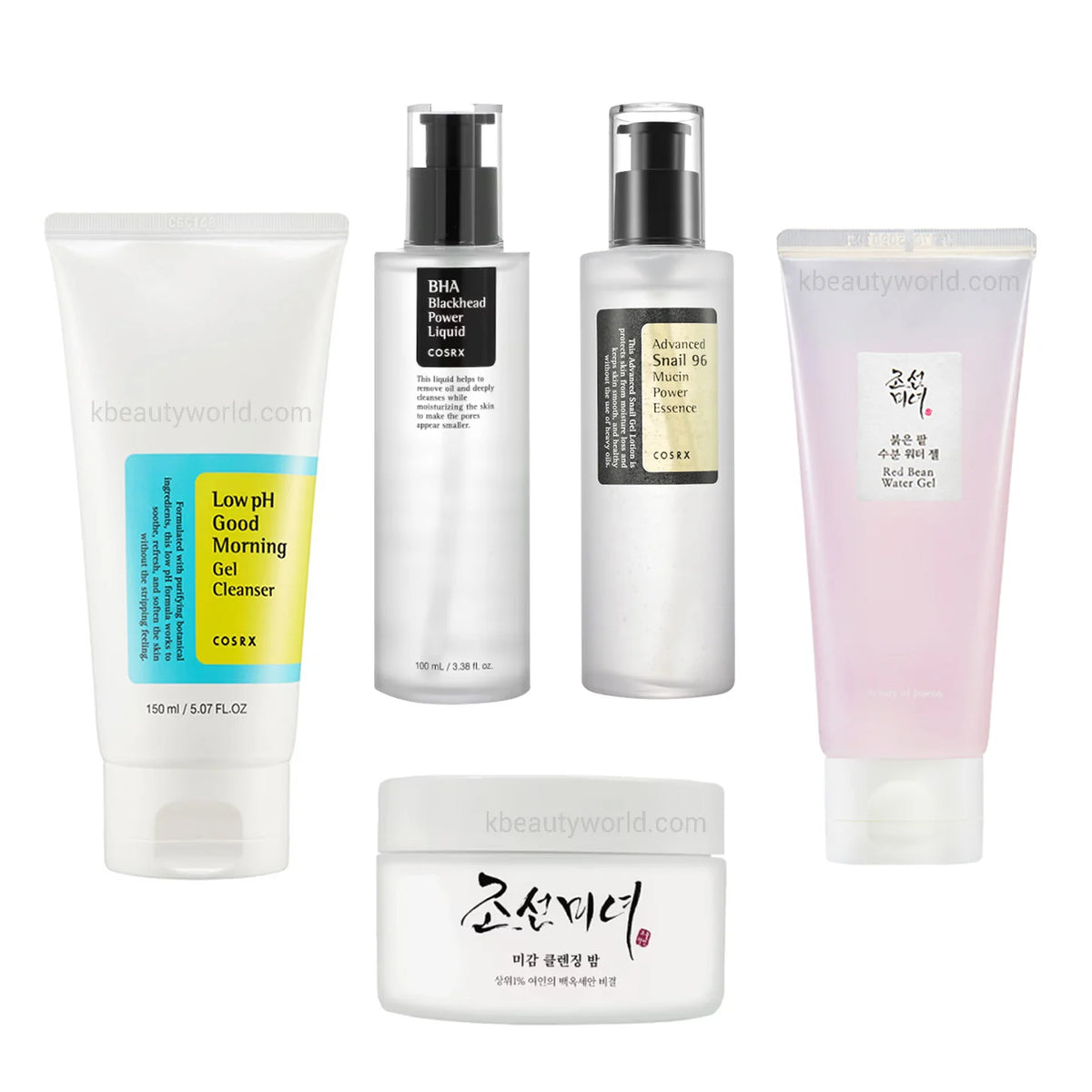
After oil cleansing, you move to a water-based cleanser.
This step removes sweat, dust, and leftover residue.
Why low-pH cleansers are popular
Healthy skin is slightly acidic (around pH 5.5).
Older, high-pH cleansers could:
- Disrupt the skin barrier
- Cause tightness and dryness
- Trigger rebound oil production
That’s why modern K-beauty favors:
- Low-pH cleansers (about 5–6)
- Sulfate-free formulas
Gentle Ingredients to Look For
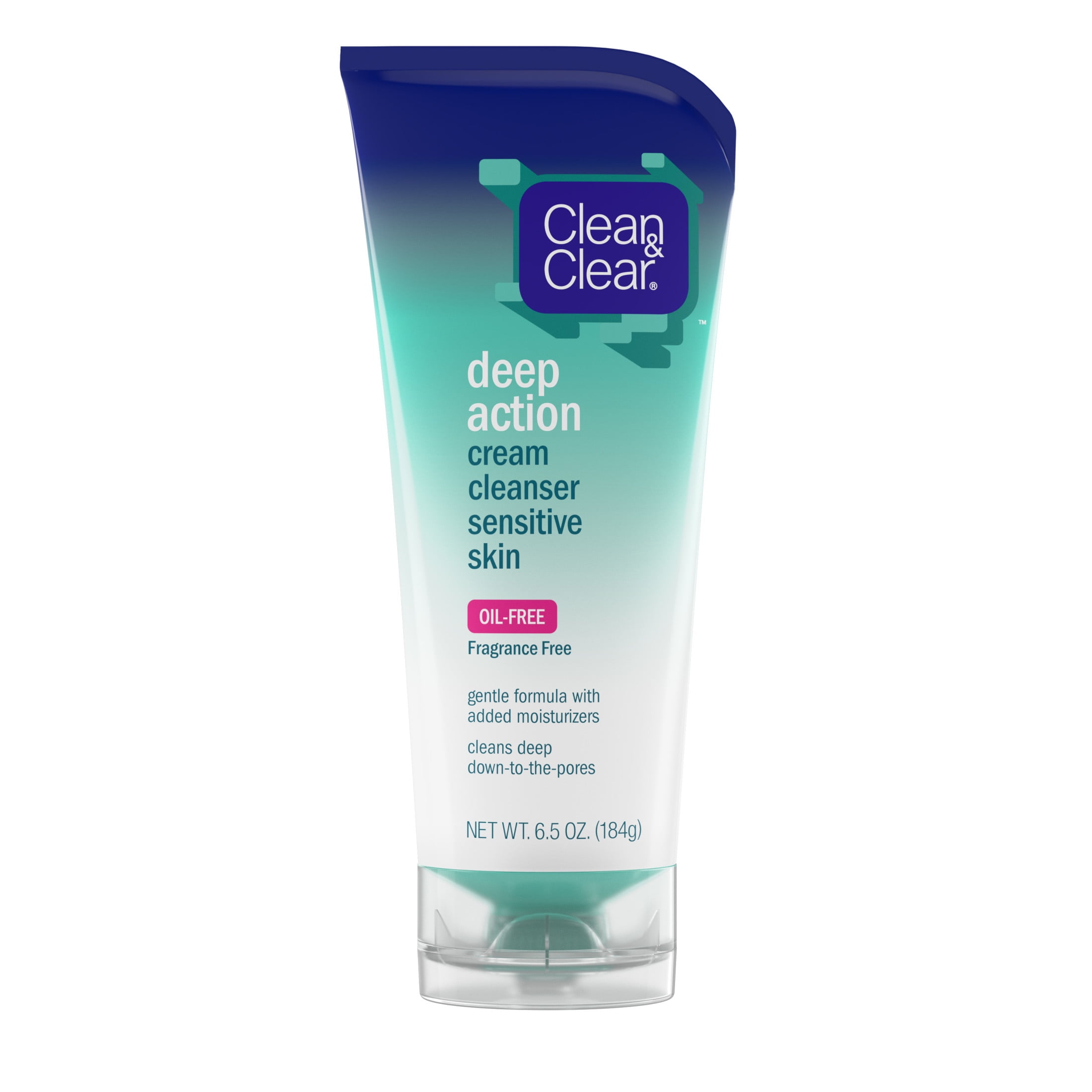
- Humectants: hyaluronic acid, glycerin, beta-glucan
- Mild surfactants: coco-glucoside, decyl glucoside
If you have dry or sensitive skin, cream or milk cleansers often feel more comfortable than foams.
How to Use a Water-Based Cleanser

- Wet face with lukewarm water
- Lather cleanser in hands first
- Massage gently for 30–60 seconds
- Rinse thoroughly
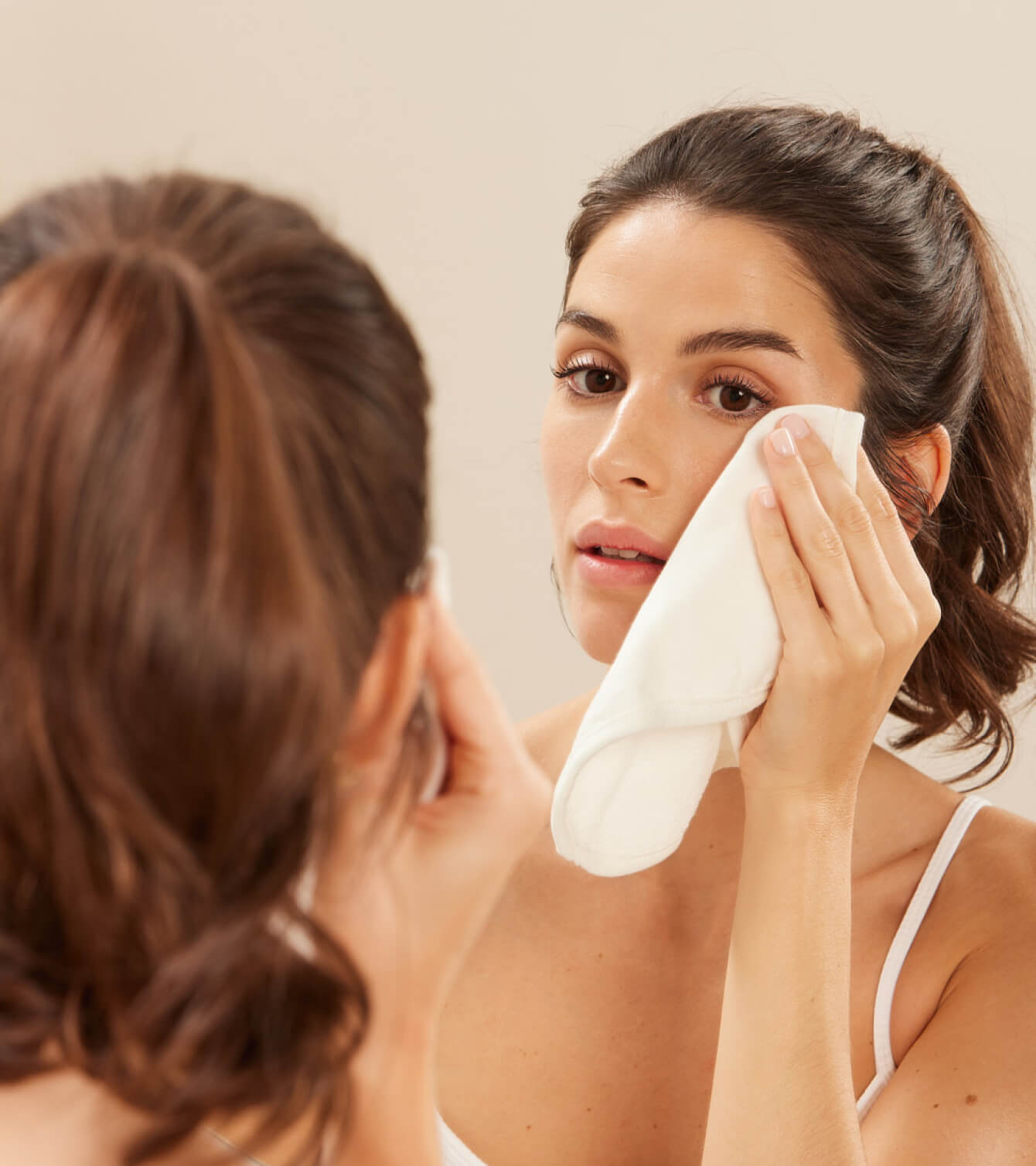
- Pat dry—do not rub
Choosing Cleansers by Skin Type
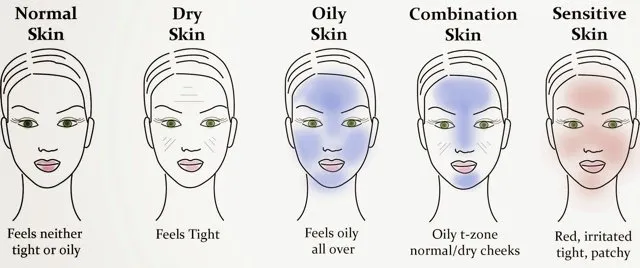

Oily / Acne-Prone Skin
- Lightweight oil cleanser
- Gel or light foam cleanser
Dry / Dehydrated Skin
- Nourishing oil cleanser
- Cream or milk cleanser
Combination Skin
- Balanced oil cleanser
- Gentle gel cleanser
Sensitive Skin
- Fragrance-free formulas
- Simple ingredient lists
- Low-pH cleansers
Exfoliating & Deep-Cleansing Products: How Often?
Exfoliating cleansers (physical or chemical) are best used 1–2 times per week, not daily—especially for dry or sensitive skin.
Signs you’re overdoing it:
- Tightness
- Redness
- Stinging
Common Cleansing Mistakes Beginners Make


Avoid these common issues:
- Very hot water
- Aggressive towel rubbing
- High-pH cleansers every day
- Chasing a “squeaky clean” feeling
- Overusing exfoliating products
Your skin should feel clean, soft, and calm—never tight or burning.
Beginner-Friendly Korean Deep Pore Cleansing Routine
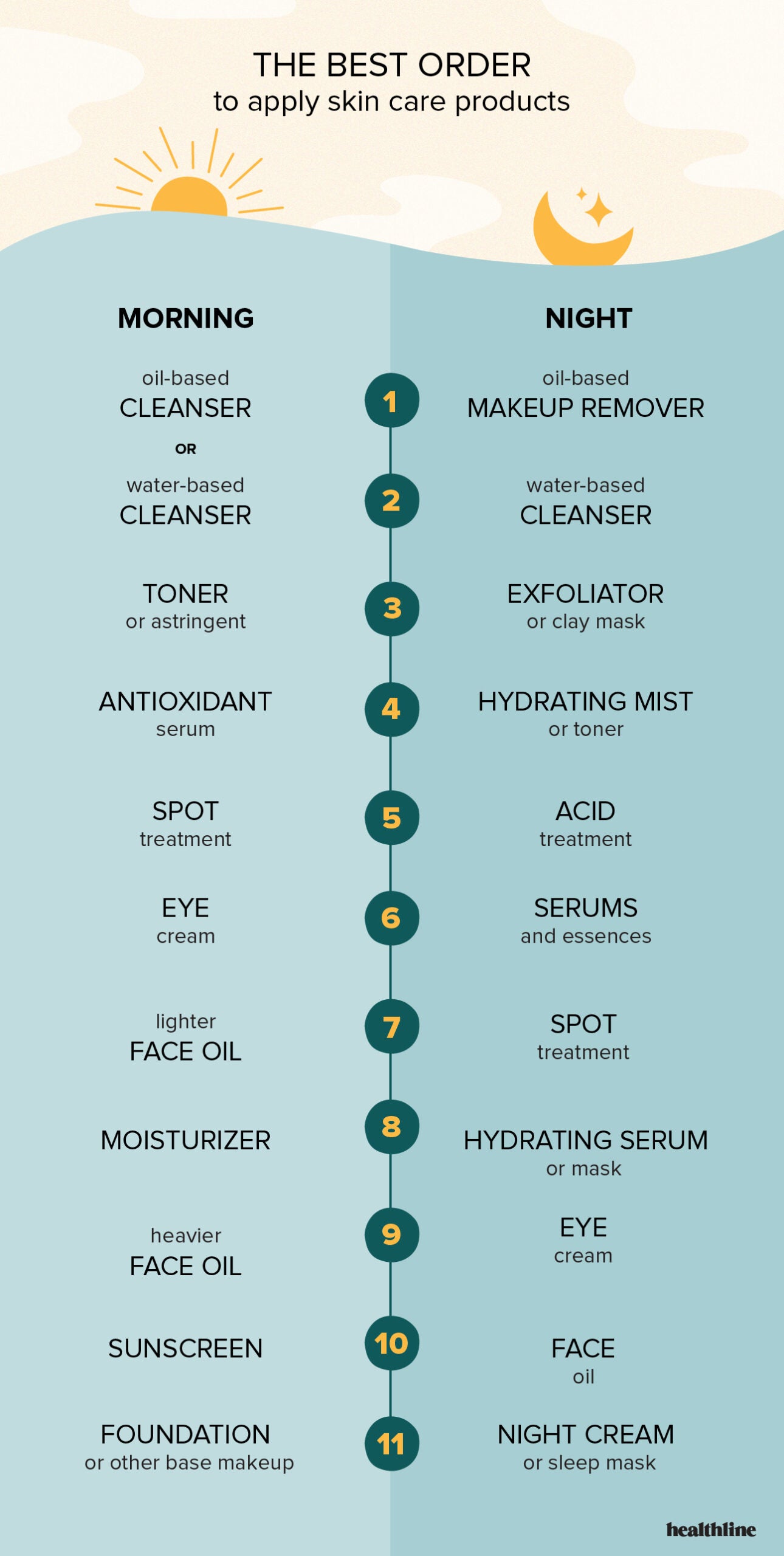
Night Routine
- Oil cleanser (30–60 seconds)
- Water-based cleanser (30–60 seconds)
- Optional exfoliation (1–2× weekly)
- Hydrating steps + moisturizer
FAQ: Korean Double Cleansing
- Morning double cleanse? Usually no
- Oily skin skip oil cleanser? Usually no
- Total cleansing time? About 2–3 minutes
Final Thoughts
Gentle, consistent cleansing helps you:
- Remove impurities thoroughly
- Protect your skin barrier
- Prepare skin for serums and moisturizers
Healthy skin starts at step one.
And in K-beauty, how you cleanse matters just as much as what you apply next.
 K Beauty Start
Leave a comment