
Dry skin tends to punish “almost-right” routines. If your skin still feels tight after layering several hydrating products, the problem is often the order of application — especially when using essence and serum together.
Both products are common in Korean skincare routines, but many people apply them incorrectly. When the order is wrong, hydration doesn’t absorb properly, and the skin can still feel dry even after multiple layers.
This guide explains:
- what essence and serum actually do
- which one goes first
- how to layer them correctly for dry skin
Quick Answer: Essence or Serum First?
In most routines:
Essence comes before serum.
A simple rule that usually works:
Apply the thinnest texture first, then thicker products.
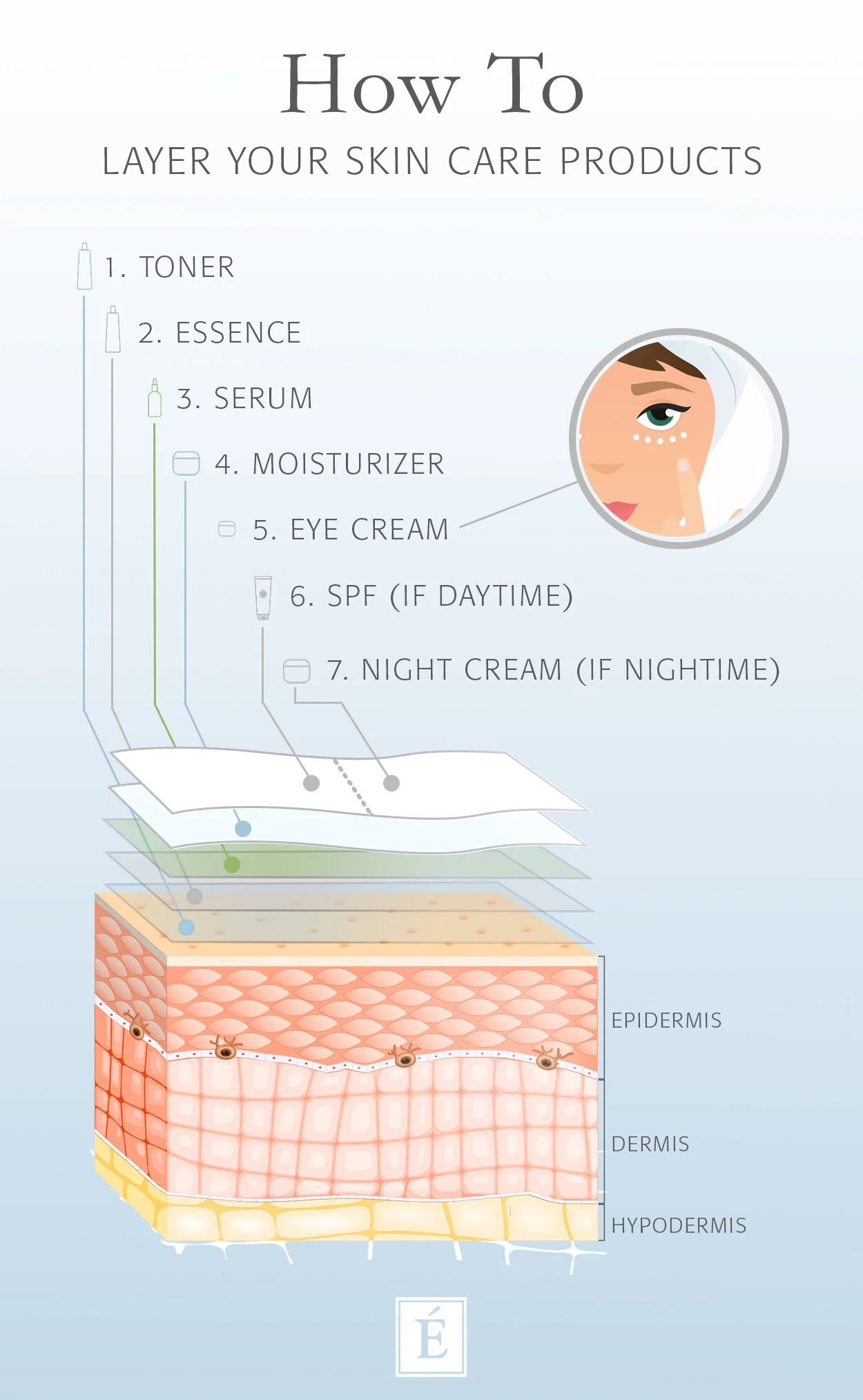
Since essences are usually more watery than serums, the common order is:
- Essence
- Serum
- Moisturizer
This helps hydration penetrate the skin before thicker treatment layers.


If your serum happens to be thinner than your essence, follow the texture rule instead of the label.
What Dry Skin Actually Needs
Dry skin usually struggles with two core issues:
1. Lack of hydration (water)
2. Weak skin barrier (lipids)
This means your routine needs to deliver:
Hydration
- humectants like glycerin or hyaluronic acid
- relief from tightness and dullness
Barrier support
- lipids such as ceramides or squalane
- reduced moisture loss
Essence and serum both help — but they usually serve different roles.
Essence vs Serum: What’s the Difference?
Although brands sometimes blur the line, the difference usually comes down to texture and concentration.
What an Essence Usually Does
Essence is generally designed to:
- deliver light hydration
- prepare skin for the next step
- improve absorption of treatments
Typical texture:
- watery
- fast absorbing
- very lightweight
Essence often acts as a hydration primer.
What a Serum Usually Does
Serums usually focus on:
- concentrated active ingredients
- targeted skin concerns
- deeper treatment benefits
Typical texture:
- gel-like
- silky
- sometimes slightly oily
Serums function as the treatment layer.


Why Order Matters More for Dry Skin
Layering incorrectly can cause several problems:
- watery products cannot penetrate thicker layers
- products may pill
- skin may feel coated but still dry underneath
Applying products thin → thick allows each layer to absorb evenly.
For dry skin, this can significantly improve comfort.
Ideal Layering Order for Dry Skin
A practical routine looks like this:
- Cleanser
- Hydrating toner (optional)
- Essence
- Serum
- Moisturizer
- Sunscreen (morning)
Think of it like this:
Essence = hydration layer
Serum = treatment layer
How to Layer Essence and Serum Without Pilling
Technique matters — especially with dry skin.
Step-by-step method:
- Apply essence to slightly damp skin
- Press gently with palms
- Wait 20–60 seconds
- Apply serum in a thin layer
- Press again for absorption


If Your Products Pill
Try adjusting the routine:
- use less product
- wait longer between layers
- avoid stacking silicone-heavy formulas
- simplify moisturizer
Pilling often happens because of too much product, not incorrect order.
Choosing an Essence for Dry Skin
Look for ingredients like:
- hyaluronic acid
- glycerin
- panthenol
- centella asiatica
These help increase hydration without irritation.
Fragrance-free options are usually safer for sensitive dry skin.
Choosing a Serum for Dry Skin
Dry skin benefits from serums that support both hydration and barrier repair.
Helpful ingredients include:
- ceramides
- squalane
- niacinamide
- peptides
A serum combining humectants + barrier support tends to perform best.
Common Mistakes That Make Dry Skin Worse
Using serum first because it’s stronger
Stronger doesn’t mean first. Hydration layers often improve absorption.
Applying products on completely dry skin
Slightly damp skin helps humectants work better.
Over-layering products
Too many steps can cause congestion or pilling.
Consistency matters more than complexity.
Skipping moisturizer
Hydrating layers need a final seal.
Without moisturizer, water evaporates quickly.
FAQ
Can I skip essence?
Yes. Many people use serum + moisturizer only and still get good results.
Essence mainly adds extra hydration.
What if my essence feels thicker?
Follow the texture rule.
Thinner product always goes first.
How long should I wait between layers?
Usually 20–60 seconds is enough.
If pilling occurs, wait slightly longer.
For most dry skin routines:
Essence goes first.
Serum goes second.
This follows the thin-to-thick layering rule, which improves hydration absorption.
Simple structure:
Hydration layer → treatment layer → moisturizer to seal.
If dryness comes with severe redness, cracking, or burning, consulting a professional may help rule out dermatitis or other skin conditions.
 K Beauty Start
Leave a comment